


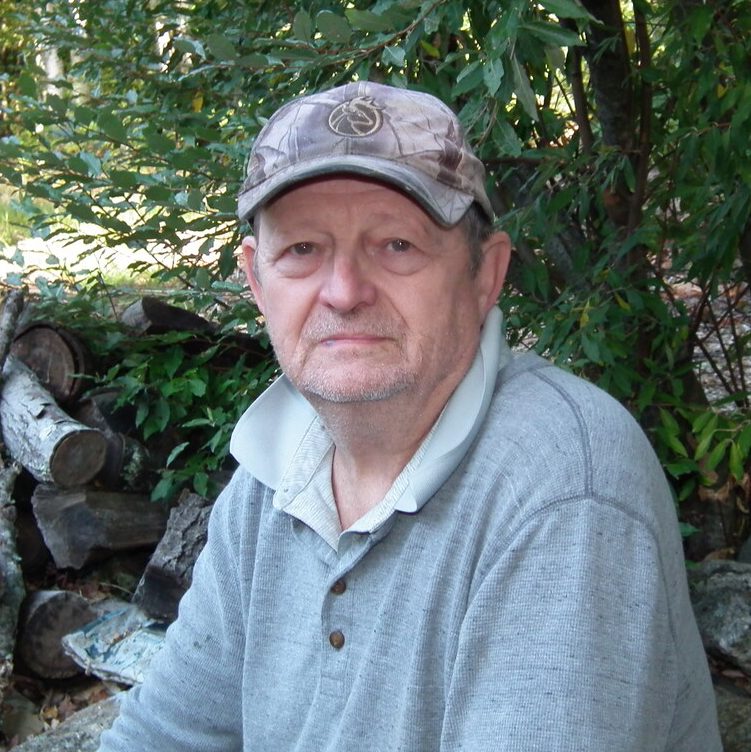

It’s interesting how life goes. I didn’t grow up in a hunting family, but somewhere along the way hunting became one of my true passions. My father had a deep respect for nature, but he worked long hours to support his family and didn’t have much time to enjoy it. I can count the number of family camping or hiking trips to Baxter State Park on one hand.
Looking back, I think my first desire to hunt started with my brother, who’s five years older. I was around thirteen at the time, but that August he turned eighteen, finally old enough to hunt alone. Until then, I didn’t even know he was interested in hunting.
That November, after he shot a doe, he came running into the house shouting, “I got a deer, I got a deer!” His hands were covered in blood, which my mother and I first thought came from the deer. It didn’t. He’d sliced his finger while field dressing, but he was too excited to notice. All I knew was I wanted to feel that same kind of excitement.
Growing up, my grandfather lived next door, and I spent a lot of time with him, actually pestering him, as he often said. We’d work in the garden, do odd jobs around the yard, and when there wasn’t much to do we’d sit on the back porch, saying little while we nursed a soda pop. Moxie was my favorite then, as it still is, and Gramps always kept a few bottles in the fridge for me.
My grandfather was a quiet man, like my dad. Even as a kid, I knew when he did speak, it was worth listening. It wasn’t until years later, after he had passed and I’d been hunting for a while, that I realized his slow-moving, seldom-speaking, always-listening ways were teaching me something. Those traits left a lasting mark and, more than anything, made me a better hunter.

As a kid, I couldn’t sit still. No matter what I was doing, I was like the Energizer bunny, full of restless energy and rarely still for long. I’d visit my grandfather and find him sitting in his favorite porch chair.
“Whatcha doing?” I’d ask.
“Just sitting,” he’d say. “You ought to try it sometime. It’s important.”
I’d just shake my head and move on. Even after I started hunting, I had trouble staying put. Within minutes, a voice inside urged me to move. Maybe it was youth, inexperience, or just impatience, but it took years and plenty of failures to learn that patience isn’t just a virtue in life. It’s one of the greatest assets in the deer woods.

I wasn’t exactly a chatterbox growing up, but there were times when I could burn anyone’s ear, including my grandfather’s. Most of the time he’d just sit there, say nothing and keep doing whatever he was doing, maybe just nodding now and then. Once he told me, “You can learn a lot by listening, you know,” apparently hoping it would sink in and I’d finally shut the heck up, which I seldom did.
It wasn’t until I was in my early twenties, after I’d started to develop some real hunting skills, that I realized how right he was. In the deer woods, listening can be everything. The snap of a twig, the faint thud of a footstep, the sudden silence of birds or the scolding of a squirrel — all of it tells a story. It might not always mean a deer, but experience has taught me that when the woods go quiet, something is nearby.
I’m not sure if my grandfather was an especially observant man, but I think he was. I’d often find him on the porch or leaning on a hoe in the garden, staring into the woods. Maybe he was lost in thought, or maybe he’d noticed the flash of a bird or the rustle of a critter. Whatever it was, he always seemed to know what was happening around his place.
I eventually learned that being observant is just as important in hunting as listening. A slight movement in the corner of the eye or changes in the behavior of birds, chipmunks and squirrels often signal something bigger nearby.
There were times growing up when I’d get frustrated trying to do something and want to give up. “I just can’t, Gramps,” I’d say.
“Never say you can’t, boy,” he’d tell me. “If you do, you’re beaten already. Stick with it and figure it out, or at least give it your best try.”
He was right, of course. If I stuck with it, tried something different, or looked at a problem another way, things usually worked out — maybe not perfectly, but good enough.
That lesson has followed me into the deer woods. Hunting deer is always a challenge. No matter how much you think you know, the deer always have a way of humbling you. Even after fifty years of hunting, I’m still reminded how much I have to learn. When that happens, I hear my grandfather’s voice telling me not to give up and to think it through before trying again. It doesn’t always end with a filled tag, but I never quit, and I always give it my best.

Like most kids, I was decent at some things and not so good at others. One thing I loved was baseball. I loved watching it, especially when Carl Yastrzemski played for the Red Sox, and I loved playing even more. I was a decent outfielder with a strong arm, but I struggled at the plate until high school. My grandfather wasn’t much of a pitcher, but he’d throw to me anyway, shouting, “You gotta have confidence, boy! Confidence! The rest will come.” I never became a Yaz or Hank Aaron, but my hitting did improve, thanks to Gramps drilling that word, confidence, into my brain.
I’ve since learned that confidence and a positive attitude play an important role in hunting. Confidence usually comes with experience, through trial and error and through both successes and failures. It also comes from having faith in ourselves and knowing we’ve done our best to prepare. Confidence keeps us motivated, our senses sharp and our patience steady. In the end, it can make all the difference when the moment comes to take the shot — especially when the pressure is on and the excitement hits.
Looking back, I have a lot to thank my grandfather for. I’m sure he was trying to teach me lessons he thought were important in life, not knowing they would also make me a better hunter. They have, in both ways. I wish he were here so I could tell him thank you.