


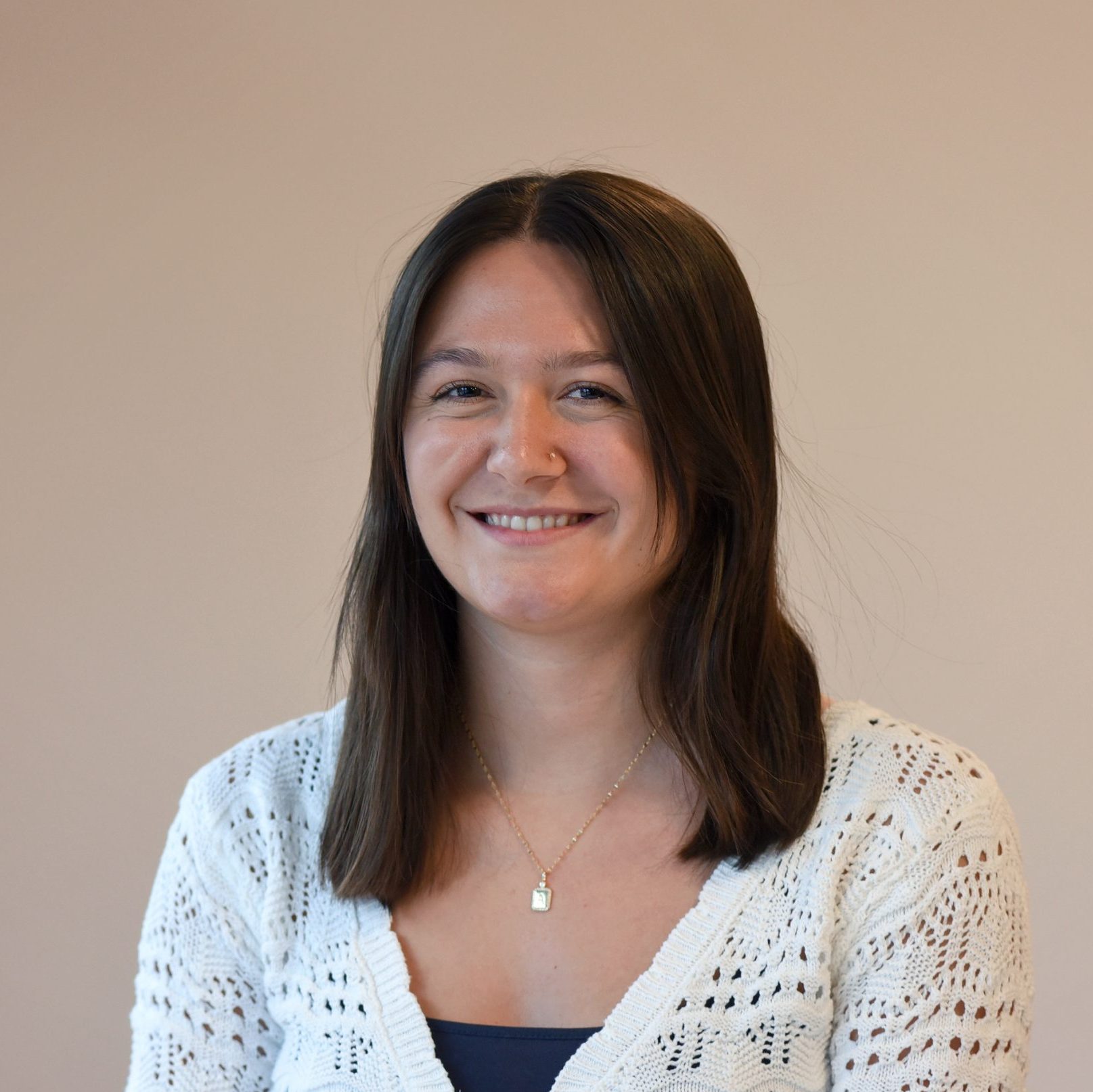

The Bangor Daily News is profiling all 12 Bangor City Council candidates ahead of the election this fall. Read more coverage of Bangor’s local election here.
A Bangor City Council candidate wants to implement a regional solution to the homelessness crisis and thinks his youth could add a new perspective to the city’s government.
Dawson Nevells, 20, has lived in Bangor for nearly 10 years and is a second-year student at the University of Maine studying political science. He hopes to work in government or law after graduation.
Nevells is a strong proponent of youth civic engagement and runs a program that works to get Bangor High School students involved in local government, he said.
He made an unsuccessful run for Bangor School Committee in 2024 when he was a senior at Bangor High School. He ran on a platform of increasing teacher pay, repairing aging school buildings, bringing a school resource officer to the high school and being a voice for students in the district.
Nevells knows some voters might be skeptical of him given his age, but he believes “it’s time for some fresh blood.”
When looking at the city’s current leadership, he added, “I see a lot of experience. I see older councilors, and I see that it’s just not really working.” The city’s youngest current councilor, Joe Leonard, is 36.
Nevells said he wants to get youth more involved in government and suggested adding a voting student representative to both the council and the School Committee.
If elected, his top priority would be instituting a regional council to address further-reaching solutions to big issues like homelessness.
“This isn’t just a Bangor problem. This is a Penobscot County problem. It’s a state problem,” Nevells said. “Maybe it’s time to look at a regional solution.”
Bangor residents and political candidates often bemoan the burden that Bangor bears as a service center city for homelessness through the region, and the city council named regional cost-sharing and collaboration as a top priority for this year, but it hasn’t yet gained much traction in getting other municipalities to contribute to homelessness services.
Nevells said he’d like to build a regional service center in Bangor that would be run by the city and neighboring municipalities. His idea is based on Haven for Hope in San Antonio, Texas, and he said he’s spoken with the people who run that shelter.
Haven for Hope is a 22-acre homeless services campus, sometimes called a “megashelter,” that combines both low- and high-barrier programs, including some that enforce regular sobriety testing. It includes dorm-style transitional housing, meals, a medical clinic and other services.
Serving nearly 7,000 people last year, the Texas shelter cost about $101 million to build in the early 2000s and now runs at about $29 million annually. The most recent data shows that there were 362 homeless people on one night in Penobscot and Piscataquis counties, a fraction of San Antonio’s homeless population.
Nevells said he expects building a version of that shelter in Bangor would have to be funded by a bond and that a regional service center could help ease the burden on Bangor’s first responders.
The candidate said he wouldn’t have supported giving a tax reimbursement to the controversial $11 million Yellen Pines project, which will offer 30 units of permanent supportive housing in Bangor. He said he liked the idea in theory and sees his regional service center as a similar concept on a larger scale, but he’s frustrated by Yellen Pines’ high price tag.
Nevells also said he’d like to impose a one-to-one restriction on local needle exchange programs, which was the statewide norm before Gov. Janet Mills loosened the rules during the COVID-19 pandemic, and that he would’ve voted yes on City Councilor Carolyn Fish’s proposed temporary ban on new syringe programs and methadone clinics.
“There’s trash everywhere, there’s needles everywhere,” he said. “These providers need to be doing a better job at regulating, and so do we as a city.”
Nevells is also concerned by rising property taxes and said he’s talked to many senior citizens for whom the city is not affordable.
“I would definitely be interested in looking at areas where we can cut taxes,” he said. “I do think that residents also have to realize, to qualify on that point, that we can’t get things done for free. And so it does take some sort of spending, but we can definitely regulate that better.”
Nevells estimated he’s attended between six and eight council meetings in the past year but watches all of them online. As a councilor, he said he’d plan to engage with the public via social media every week and explain how he voted on particular items to make council business easier for people to understand.
A registered Democrat, Nevelled explained that “as far as my thought process goes, I’m very independent minded. I’m willing to see all sides.”
He added, “I would just like us to see us come together on the 90% of things that both parties agree on and then put the 10% of things we disagree on aside.”