


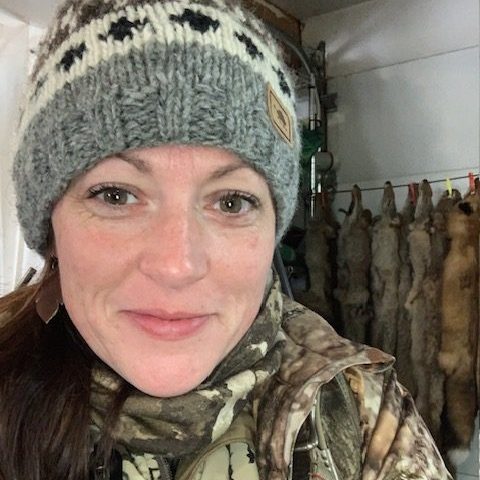

“Did you catch that yourself?”
That was one of the first comments I heard after landing a 36-inch pike on a fly rod. That one question says everything about what it can be like to be a woman in the outdoors.
I had actually caught two pike that day — one 36 inches, the other 30. Earlier, joking with a friend, I told him I needed to catch a big fish to earn some credibility. He chuckled, and asked what I meant. In my experience, to be taken seriously you need “numbers” to back you up.
Point proven.
I’ve also shot a 457-pound black bear and a 986-pound dressed moose. I know how to hunt and fish — and I shouldn’t have to prove it every time.
Women represent one of the fastest-growing demographics in hunting and shooting sports, yet many still face the same skepticism I encounter regularly.
Do men? Do men get quizzed about the grain of the bullet they use? I’m genuinely curious.
It’s gotten better as I’ve put in more years, but I’m still challenged on my credentials as an outdoorswoman.
A former Maine Department of Inland Fisheries and Wildlife employee recently accused Commissioner Judy Camuso and the department of discrimination against men and favoritism toward women in promotions.
more from erin merrill

As a woman with a fairly public persona in the outdoor realm, I couldn’t help but laugh. Discrimination? This is what women have been dealing with for decades.
When I first started writing about hunting and fishing, I went in naively, thinking everyone would just appreciate the story and the photos: a deer harvested, a bear trapped or a fish caught. I assumed people understood that the meat we eat comes from an animal that was killed. I assumed I was on equal footing with my fellow writers and outdoorsmen.
I was so, so wrong.
Years ago, I wrote an article about the harassment women face. I interviewed friends and shared my own experiences. An editor refused to print it.
The article is more than a decade old and yet still relevant. The cyber world is the real world, and harassment is easier than ever when people can hide behind a keyboard.
And yet, despite these obstacles, Maine is fortunate to have women leaders shaping the outdoors.
Shevenell Webb, the state’s furbearer and small game specialist, led the effort to write the recent furbearer management plan. She is incredibly knowledgeable and her office is adorned with pelts from various animals that she had worked with. I have interviewed her a few times and she could give a seasoned trapper a run for their money.
more from erin merrill

Jen Vashon, DIF&W’s lead bear and lynx biologist, has decades of knowledge that rivals any wildlife expert in the country. I was lucky enough to work with her on the bear management portion of the big game management plan.
Catherine Gordon, the only woman currently on the DIF&W Advisory Council, is a Maine Guide who works with veterans and helps get more women and girls outside.
Christi Elliott has built a community of more than 7,500 women who celebrate each other while improving and learning new outdoor skills.
I proudly testified in support of Camuso to become the first woman to lead the department. She lives the life she promotes — her social media is filled with fishing trips, spring turkey hunts, even her first whitetail deer. She has helped so many minorities and women get outside into the hunting and fishing world and feel comfortable doing so.
Even though he is an avid fisherman, I don’t recall Chandler Woodcock ever posting a photo of a fish that he caught while commissioner. Yet no one questioned his credibility, or whether he truly supported the activities he was charged with overseeing.
The hunting, fishing and trapping communities are still steeped in patriarchal norms. But there are plenty of people who support women, LGBTQ+ folks and minorities in the outdoors.
more from erin merrill

Why? Because they’re not threatened. They just want to swap stories: what deer they saw, how the hunt went and whether it was successful. That’s it.
We have far more in common than we have differences. No one should feel like they don’t belong because they don’t look like the “stereotypical hunter.”
The future of hunting and fishing in Maine depends on welcoming everyone who shares our passion for the outdoors and conservation. Excluding people based on gender, sexual orientation or race isn’t just morally wrong — it’s self-defeating for sports that need growing participation to maintain political and financial support.
And if I can offer one piece of advice to those who feel threatened by women, LGBTQ+ folks and minorities carving out a place in the outdoor world, it’s this, the words most often shared with me online: “Maybe you should show your boobs and try smiling more.”
That’s the standard women are still held to. It’s time we end it — and let skill, passion and knowledge speak for themselves.