


The BDN Opinion section operates independently and does not set news policies or contribute to reporting or editing articles elsewhere in the newspaper or on bangordailynews.com
Jeremy Sheaffer is the Maine state director for The Wilderness Society.
As the Senate prepares to consider S.J. Res. 109, Sen. Susan Collins faces a consequential choice. For people who do not follow congressional jargon, “S.J. Res.” means “Senate Joint Resolution.” In this case, it is a measure that would let Congress wipe out the Bureau of Land Management’s approved plan for Utah’s Grand Staircase-Escalante National Monument.
This is not just a fight about one landscape. It is a test of whether years of public input, Tribal consultation, and public lands stewardship can be tossed aside with a single vote. That should matter to Mainers and to anyone who believes public decisions should reflect the public’s voice.
The Grand Staircase-Escalante management plan followed a lengthy public process involving Tribal Nations, local communities, public officials, recreation advocates, and conservation voices. Over more than two years, the Bureau of Land Management held 34 public and stakeholder meetings, and the plan drew nearly 7,000 comments. People showed up, spoke up, and participated in the process they were asked to trust.
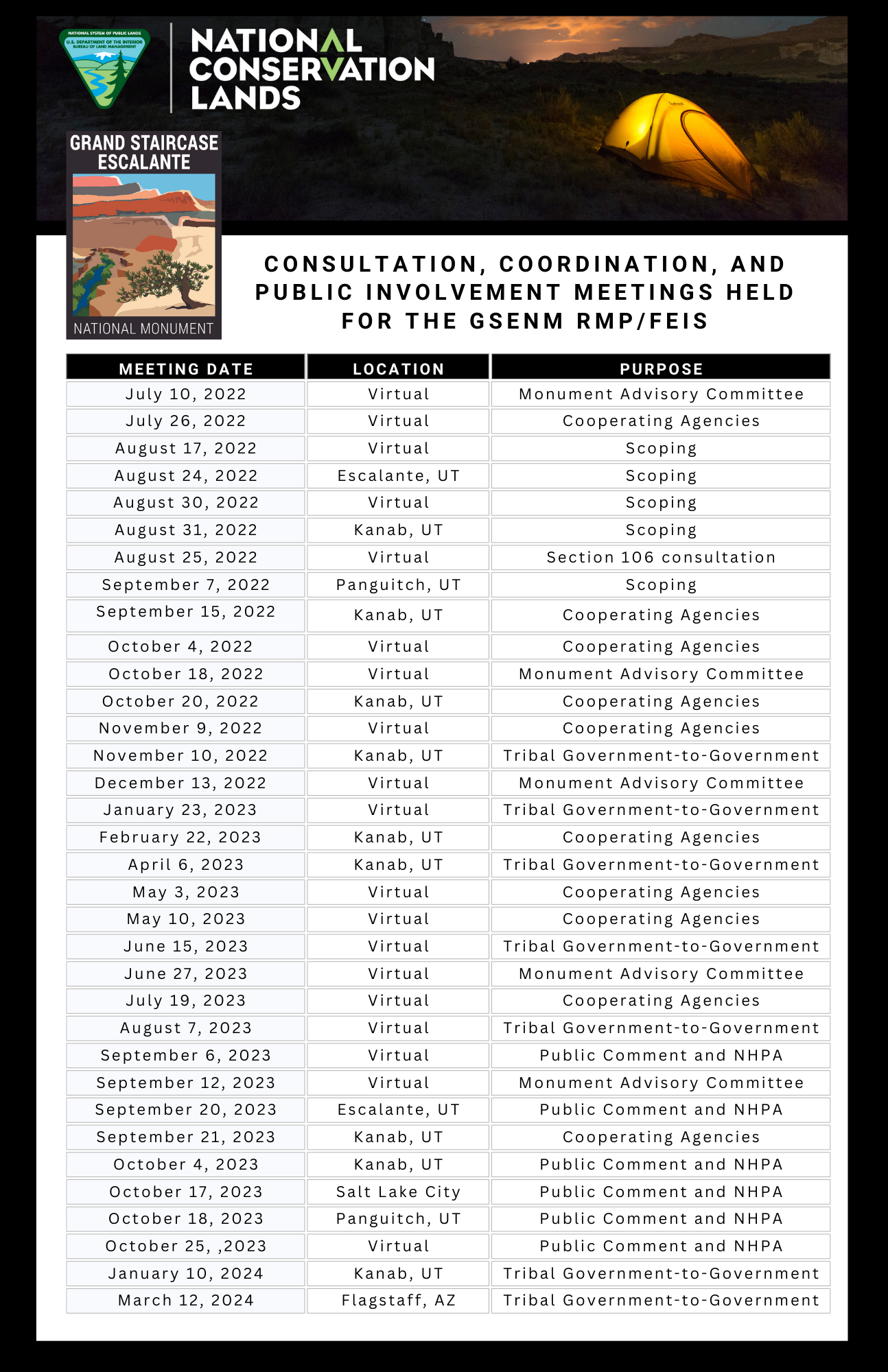
Anyone who has taken part in a public process knows these plans are rarely perfect. No one gets everything they want. But legitimacy comes from the fact that people were heard and tradeoffs were made in the open. If we stop respecting that process, we weaken one of the few things that allows public lands decisions to endure.
S.J. Res. 109 would erase that process with a single vote by using the Congressional Review Act, a law that lets Congress nullify certain agency actions through a joint resolution of disapproval. If that happens here, the plan would be void, and the federal government could be blocked from issuing another one that is substantially the same. In plain English: years of input could be discarded, and the door to a similar plan could be shut.
That is why Maine should not see this as somebody else’s fight. Here in Maine, Katahdin Woods and Waters National Monument is going through its own management planning process. People are taking time to attend meetings, submit comments, and share what they want for future generations. If politicians in Washington can sweep aside a completed planning process in Utah, what should Mainers conclude about the value of their participation? What should any community conclude when it is asked to engage in good faith, only to watch the outcome get tossed when it becomes politically convenient?
The message would be unmistakable: Your time does not matter, your testimony does not matter, and your participation can be overruled after the fact by politicians far removed from the place at issue. I believe that is a corrosive message in Maine and across the country. We should be encouraging people to take part in public decisions, not teaching them that the process is performative.
The danger does not stop in Utah. Using the Congressional Review Act this way risks turning it into a wrecking ball for long-term public lands planning. If this maneuver succeeds, it creates a precedent that could be used against planning efforts elsewhere — undermining certainty, destabilizing management, and making communities wonder why they should bother participating at all.
Public lands belong to all of us. They safeguard wildlife habitat, cultural and historic resources, clean water, outdoor traditions, and local economies. Their management should be guided by transparency, science, and public involvement, not by a last-minute political maneuver that tells communities their input was disposable.
Sen. Collins has long said that good government depends on listening to stakeholders and respecting process. This is a moment to put those values into practice.
A vote against S.J. Res. 109 would defend more than Grand Staircase-Escalante. It would defend the idea that public participation still means something in this country — from Utah to Maine. For the sake of that principle, and for the integrity of public lands decisions nationwide, she should vote no.