


The BDN Opinion section operates independently and does not set news policies or contribute to reporting or editing articles elsewhere in the newspaper or on bangordailynews.com
Scott Denman is an energy policy analyst and the director of the national Independent Council for Safe Energy Fund, a nonprofit philanthropy based in Belmont.
Gov. Janet Mills and the Legislature deserve credit for launching the vital “Maine Won’t Wait” climate action plan to achieve carbon neutrality by 2045. As the climate crisis worsens, by working together, we Mainers can and must make smart, essential and timely energy technology choices that actually cut greenhouse gasses. A diverse hybrid of grid-flexible widely distributed renewable power options (like solar and wind), dramatically improved efficiency and high-tech power storage affordably reduce greenhouse gasses, like CO2, and provide good-paying jobs while bolstering our local economies.
Some schemes not only can’t reduce climate gasses in time, but pursuing them wastes precious time and money and are, in fact, counterproductive. A bill now before the Legislature, LD 1549, is a fool’s gold approach to the climate crisis and Maine’s energy needs. This bill parrots the industry’s hype for small modular reactors. Much ballyhooed, small modular reactors are technically unproven — the first U.S. prototype won’t even be built until at least 2029.
Maine electric customers can’t afford the staggering cost of uncompetitive small modular reactors or other “new” untested reactor concepts. According to Lazard, the world’s premier energy financial analytic firm, the “best case” scenario for new reactors will be five times more expensive than utility-scale solar and wind power — industries thriving today in the Pine Tree State. The leading small modular reactors concept, in Utah, is now seven years late and, in 2022, its price estimate jumped from $55 per megawatt hour to more than $100 per MWh, with the federal subsidy included.
Yet more lavish taxpayer subsidies in the Infrastructure Investment and Jobs Act, Inflation Reduction Act and annual federal budget — totaling up to more than $148 billion — attempt to resuscitate nuclear power. Historically, nuclear has sucked up nearly 50 percent of all federal taxpayer energy research and development funds, according to the Congressional Research Service, despite providing only about 8 percent of our energy supply and about 19 percent of our electricity.
Maine’s unique natural heritage is at risk with new reactors. Stanford University research concluded that, contrary to promises, small modular reactors will create far more highly dangerous radioactive waste per unit of electricity generated than large reactors, like long-shuttered Maine Yankee at Wiscasset. Despite seven decades of industry assurances, there is still no proven method to permanently isolate and store these toxic isotopes, some of which remain toxic for hundreds of thousands of years.
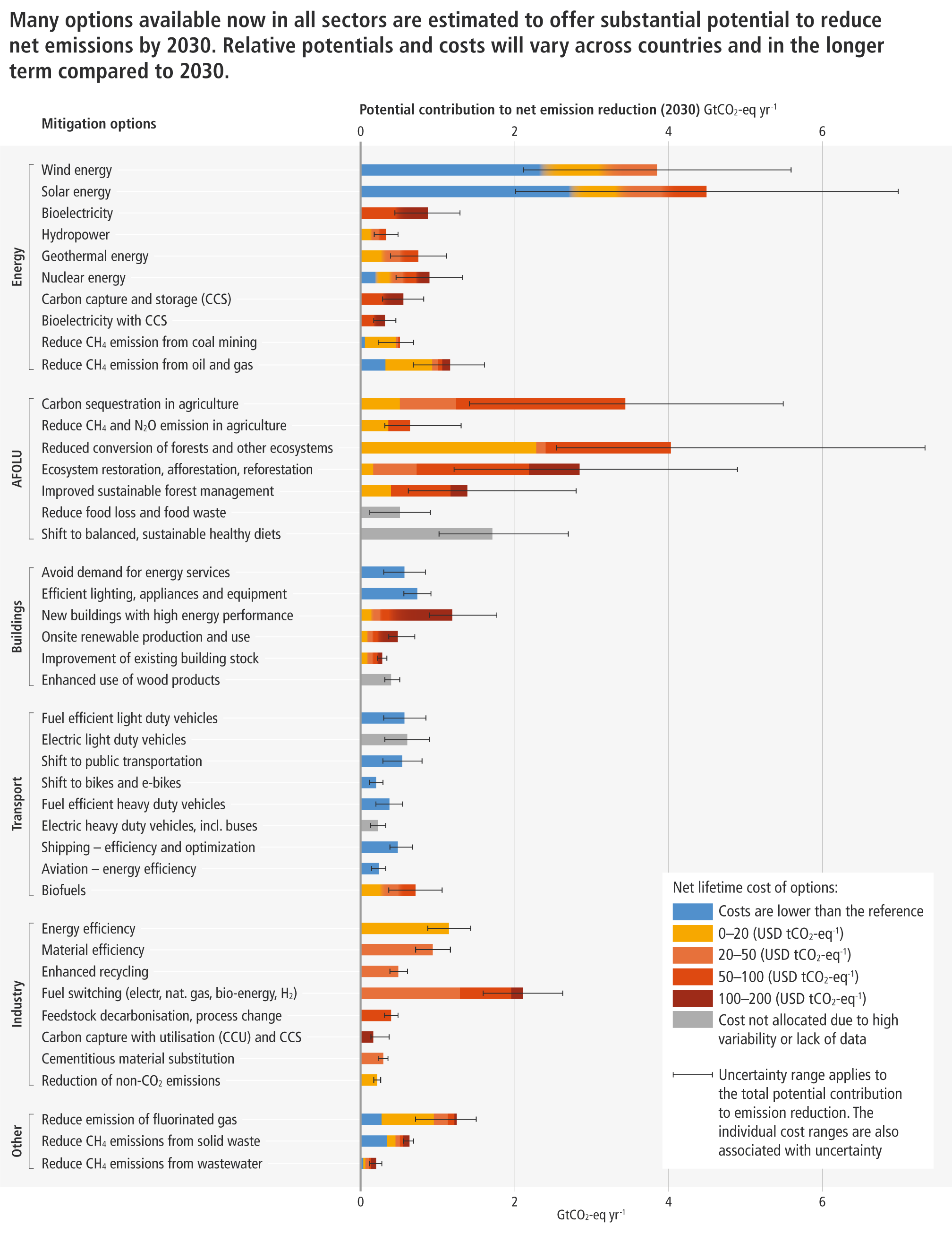
This year, the United Nations International Panel on Climate Change warned that society is dangerously close to exceeding the global warming “tipping point.” In April, the U.N. panel reported that renewable energy (like solar, wind and hydro — all abundant in Maine) is much more efficient than nuclear in mitigating CO2. Indeed, we can fully meet our climate and clean energy goals without new nuclear.
Maine’s families and businesses can’t afford nuclear power’s notorious cost overruns and interminable delays. A U.S. Department of Energy review found that the final costs and construction times for 75 reactors built between 1966 and 1977, on average, were three times higher than the original estimates and took twice as long to build. Of 30 new reactors ordered in the mid-2000s, all except two were canceled. In South Carolina, the failed V.C. Summer project burned through $9 billion before the twin reactors were prudently scrapped in 2017. In Georgia, a new reactor is seven years behind schedule and at least $20 billion over budget. Westinghouse, the contractor for the South Carolina and Georgia plants, went bankrupt trying and failing to build those four reactors. As a result, Georgia ratepayers are facing sticker shock with looming, 20 percent electric bill hikes.
Mainers will vote for legislators and respect utility regulators who protect family and business checkbooks. If small modular reactors are to be “studied” yet again, as proposed by LD 1549, let Central Maine Power and Versant Power shareholders foot the bill and do the study themselves — not the Maine Public Service Commission.
Affordable, truly clean energy in Maine is available now. Don’t get sold on techno-fantasies like “new and improved” nuclear reactors, we can’t pay the price.